

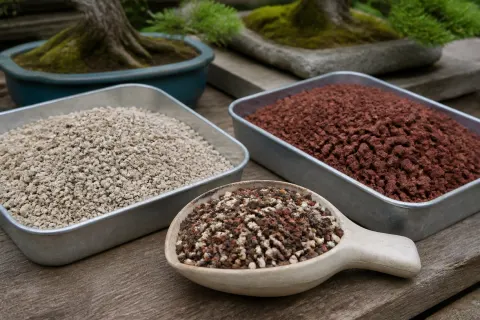
Tip a handful of pumice from the bottom of the bag onto a dark saucer. Lift the pale stones and you may see a dusty outline underneath. Which part should go into the pot? Start with that handful. You can learn a great deal about a bag of soil without lifting the tree out of its pot.
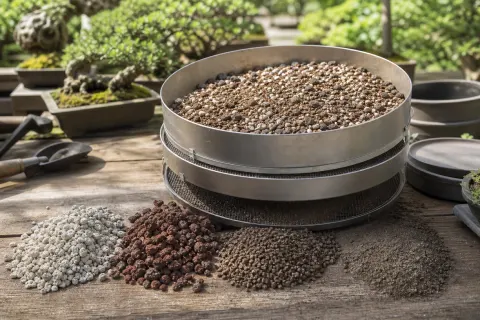
Two screens give you three grades
- Set aside the oversize pieces. Rest the coarser screen over a tray. Work a little material from side to side and put what stays on top in a separate container.
- Catch the middle grade. Pass the contents of the tray through the finer screen. The grains it retains fit between your two mesh sizes. Handle soft akadama gently. Rubbing it against the mesh creates more fines.
- Look beneath the fine screen. Small, intact grains and flour-like dust can land in the same tray. Set aside any useful fine grade separately and leave loose powder out of the prepared mineral mix.
What does 4–8 mm on a bag of pumice tell you?
It describes the nominal grade, roughly ⅙ to ⅓ inch. It cannot tell you how much material rubbed off in transit. If the sample is evenly graded and clean, another pass adds little. A sieve separates by size. It cannot turn an oversized stone into a smaller one.
Match the grade to the pot
Drop a few grains into an empty pot similar to the one you use. If a handful of pieces takes up much of a tiny pot, try smaller intact grains. Coarser pieces are easier to distribute in a larger training pot. Consider the species, exposure and how often you can check moisture. A small pot on a windy balcony and a larger one in a sheltered corner will dry differently.
Try a side-by-side check. Fill two identical spare pots with different grades of the same material. Water both, then check beneath the surface later to see which sample is still damp. Use that observation when planning your mix, and check the actual root ball once the tree is planted. See how to water bonsai in heat and wind.
Do you need a set of sieves?
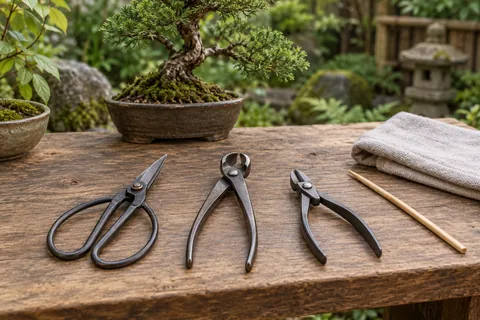
For one dusty bag, a garden sieve with a suitable mesh and a catch tray may be all you need. Interchangeable screens earn their space when you sort several grades regularly. Label each container with the material and mesh sizes while they are in front of you. For the rest of the bench, see our guide to essential bonsai tools.
Comments 0
No comments yet.